The escalating conflict over powered people
The Night CleanerThe escalating conflict over powered people is the widening social crisis in which fear of the gifted and their fear of human persecution feed one another, turning isolated disputes into civil unrest and eventually open battle. First visible in Seahill’s hospitals as a succession of power-related injuries, the conflict gathers force through public revelation, civic panic, and Dorian’s attempt to draw the gifted away from the Hero Society and into his cause.
Origins and Early Signs
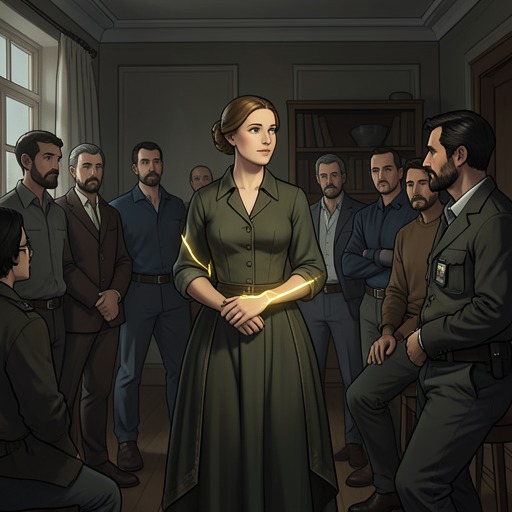
The crisis is already under way when Esme prepares for a hospital night shift. She connects the quiet civil war in the streets to the incident in which a pastor gave people with powers a hallucinogen, and senses that the apparent quiet will not last. Her work as a nurse makes the conflict more than a distant political concern: she is treating people with powers and, when needed, serving part-time at the Hero Society headquarters.
At the hospital, the growing tension becomes legible through ordinary patient care. One report describes two men fighting after a brother accused his sister’s boyfriend of using his powers to seduce her; one of the young men can read minds. The injuries are limited, but the incident carries a wider implication: suspicion about powers is already shaping relationships and turning accusation into violence.
The staff report that this is the third set of patients in twenty-four hours whose injuries involve someone with powers. The count gives the crisis a pace and a pattern. For Esme and her colleagues, who want people to be safe, the repeated cases make a wider confrontation seem foreseeable; Seahill’s residents, she fears, may end up destroying one another.
Fear, Injury, and the Approach of War
The violence does not run in only one direction. After Leon intervenes to protect Charles from a man who tries to hurt him, Leon is brought to the medical room with a stab wound, while the assailant is taken to the police station and charged with assault. The episode places the conflict inside a climate where fear can turn into attacks on people, while also showing individuals putting themselves at risk to protect others.
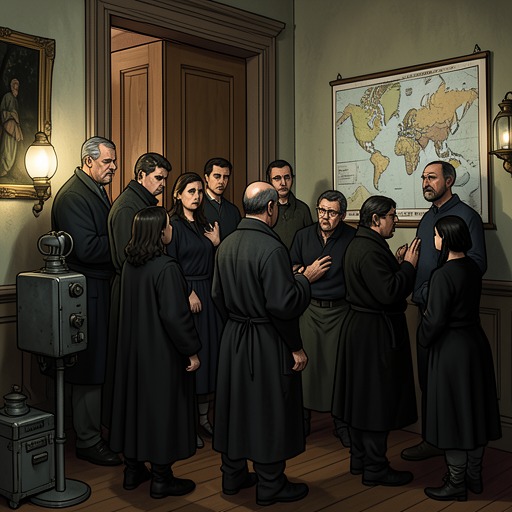
In the aftermath, Lilith describes people acting out of fear and warns that war is coming. Esme wonders whether the still-unidentified person the group has been searching for is exploiting the upheaval to build an army. Her suspicion joins the personal and political scales of the crisis: individual clashes are occurring amid a broader disorder that may be deliberately cultivated. Leon’s answer is more limited and practical: the group must keep helping as best it can and let events run their course.
The conflict’s central problem is that the gifted cannot make their powers acceptable to everyone. Esme recognizes that even good people with powers will be feared and rejected. At the same time, the later appeal made by Dorian’s side presents the gifted as people who have been abandoned and endangered by humans. These accounts do not erase the harm caused by violence; together, they show how opposing claims of protection and persecution sustain the widening divide.
Public Revelation and Civic Breakdown
Dorian’s televised announcement marks a decisive change in the conflict’s visibility. Speaking from the capitol, he tells the world that people with powers are among them and will not go away. For Esme and Rose, watching the broadcast ends a brief moment of hoped-for peace: the gifted can no longer remain a hidden presence, and the public declaration signals that the crisis has entered a new phase.
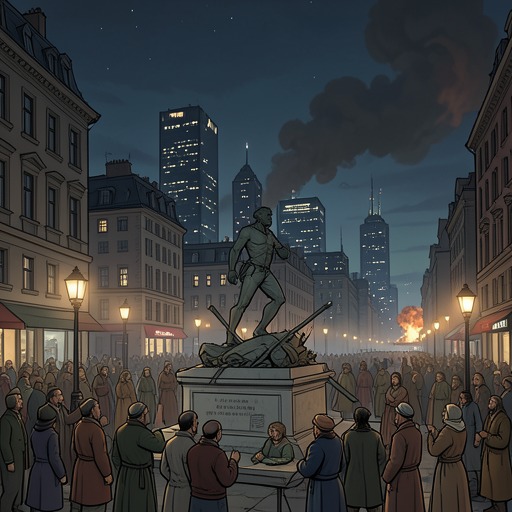
Civic control deteriorates soon afterward. The governor imposes a mandatory curfew, and police patrol the streets while broadcasting instructions over their radios. People do not obey; panic intensifies when news spreads that the bridge has been knocked out, and looting, fighting, and fires take over. The sequence links political revelation and disrupted infrastructure with a breakdown in everyday order, showing how quickly fear becomes a public emergency.
Dorian’s Appeal and Open Confrontation
When Dorian addresses the gifted, he frames the Hero Society as a failed cause and offers freedom from fear and human persecution in its place. He argues that humans who were willing to hurt the gifted have abandoned them, and invokes the gods’ deaths as a warning against following their fate. His appeal tries to turn accumulated grievance into allegiance, but the heroes do not waver. Esme rejects a simple division between good and evil, reasoning that people can do harmful things for good reasons and good things for bad ones; the conflict, in her view, cannot be understood through a clean moral binary.
The confrontation becomes battle when Dorian calls the heroes to fight. The city is described as a battleground in which only one side can win, and participants pair off against opponents they consider their equals. Leon faces Ajax, Lilith faces Monica, and Phillip faces Ron Presley, while the mind-reading young man first encountered in the hospital is also among the combatants. The earlier hospital report thus returns in transformed form: what first appeared as a contained dispute involving powers is now part of a citywide struggle.
Significance
The conflict develops by accumulation rather than through a single cause: a hallucinogen incident is followed by recurring injuries, fear-driven attacks, warnings of war, a public declaration, and the failure of curfew to contain panic. Across these stages, the narrative connects private relationships and medical work to the fate of Seahill as a whole. Dorian’s language of freedom answers a real fear of persecution, yet his invitation accompanies an ultimatum and leads into armed confrontation. The conflict’s defining tension is therefore not simply between people with powers and those without them, but between competing claims about safety, belonging, and who has the right to decide the gifted’s future.